Newcastle Greyhound Results: Race Times, Trap Stats & Track Guide
Every trap. Every time. Every result.
 Available in US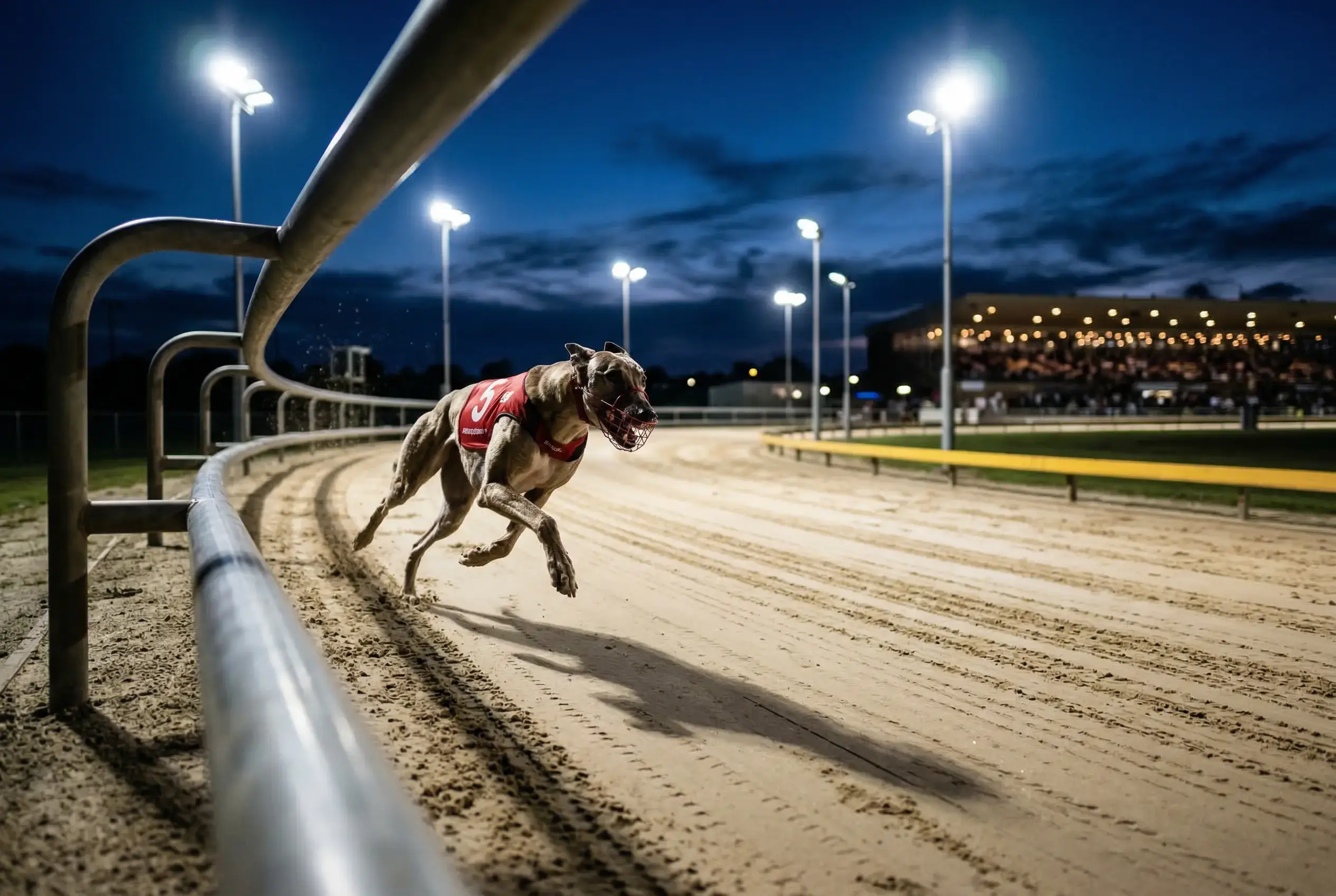
Racing at Brough Park: What Newcastle Greyhound Results Tell You
Newcastle greyhound results are more than a scoreboard. They are a running record of everything that happens on the sand at Brough Park — trap draws, sectional times, finishing distances, starting prices, and the form lines that separate a shrewd punt from a hopeful stab in the dark. Whether you follow the dogs on a Tuesday afternoon BAGS meeting or turn up trackside for a Saturday evening card under the floodlights, those results carry information that shapes every bet, every selection, and every conversation about the sport in the North East.
Brough Park sits in Byker, a couple of miles east of Newcastle city centre, and it has staged greyhound racing since 1928. That makes it one of the longest-serving venues in British dog racing — and in 2026, as the sport marks its centenary year, the track enters its 98th season with a packed calendar, a rising attendance curve, and the kind of data trail that rewards anyone willing to look closely. The GBGB centenary programme has put greyhound racing back in the spotlight, and Newcastle is very much part of that conversation.
This guide breaks down Newcastle greyhound results from every angle. You will find the race schedule, a track layout analysis, trap bias data, a full glossary of result abbreviations, distance breakdowns, the history of major competitions at Brough Park, and the welfare numbers that underpin the sport's governance. It is written for punters who want an edge, for newcomers who want to understand what they are looking at, and for anyone who thinks a night at the dogs deserves the same analytical attention as a day at the races. Every trap. Every time. Every result.
Newcastle Dogs at a Glance: The Numbers, the Schedule, the Edge
- Brough Park runs greyhound racing on Tuesdays, Wednesdays, Thursdays and Saturdays across a 415-metre sand circuit with distances from 290m to 895m.
- Trap bias is real and measurable — inside traps consistently outperform middle draws at Newcastle, and checking current stats on GreyhoundStats.co.uk before placing a bet is non-negotiable.
- GBGB injury rates fell to a record low of 1.07% in 2024, with 94% of retired greyhounds successfully rehomed — welfare metrics that directly affect how the sport is regulated and funded.
- UK greyhound betting turnover stands at £794 million in retail alone, but the figure has dropped 23% in real terms over three years, making track-level economics increasingly important.
- The 2026 centenary season brings renewed investment and ARC's new Racing Club Membership programme to Newcastle, offering free entry and food discounts to regular racegoers.
Latest Newcastle Greyhound Results and Where to Find Them
Getting hold of Newcastle greyhound results used to mean checking the back page of a newspaper or ringing a premium-rate phone line. Those days are long gone. Today, results from Brough Park are available within seconds of the winning greyhound crossing the line, distributed across multiple platforms in a format that ranges from a bare finishing order to a full-blown statistical breakdown.
Official and Third-Party Result Sources
The most direct route to Newcastle results is the GBGB website, which publishes finishing positions, distances, sectional times and starting prices for every licensed meeting in the country. GBGB data is the official record — what stewards and the regulator rely on. For a more punter-friendly presentation, Racing Post and Sporting Life both carry Newcastle results alongside form analysis, ratings and tipping content. Timeform, which has been rating greyhounds for decades, provides sectional-time analysis that serious students of form consider essential.
Bookmaker platforms — Bet365, William Hill, Betfair, Coral, Paddy Power and others — also display results as soon as races are settled, typically accompanied by live or near-live video. Because Newcastle is part of the Entain–ARC media rights agreement running until 2029, the track's races are broadcast through SIS (Satellite Information Services) to betting shops and streaming platforms across the UK. If you placed a bet online, the result will appear in your settled bets tab before you have time to make a cup of tea.
What the Results Tell You
A raw result line from Newcastle typically includes the trap number, the greyhound's name, the finishing position, the distance behind the winner (in lengths), the sectional and run time, the weight of the dog, the starting price, and a comment code explaining how the race unfolded — whether the dog led, challenged, stumbled or ran wide. Each of these fields feeds into form analysis. A greyhound that finishes second but ran a faster sectional than the winner is arguably the better prospect next time, depending on the trap draw. The abbreviations and codes are covered in detail later in this guide.
Attendance and the Live Experience
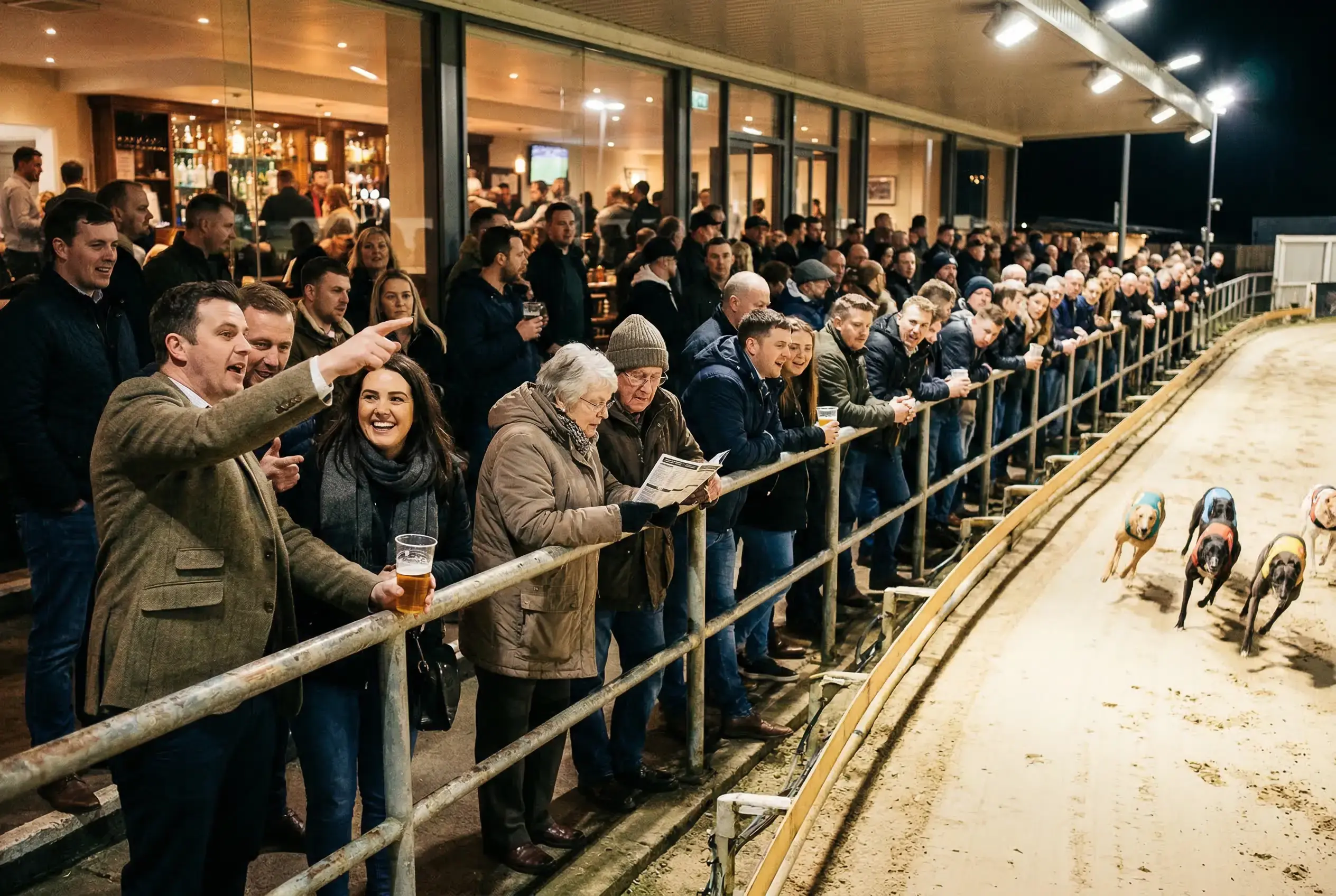
Results data does not exist in a vacuum. It is generated at a track where people are physically present, watching the action unfold in real time. Newcastle has seen a significant rise in footfall in recent years. During the 2025 All England Cup finals, attendance surged by 85% year on year, a figure that reflects both the quality of the racing and ARC's investment in the matchday experience. As Sarah from Arena Racing Company put it: "Value for money and a quality race night experience are essential not only to attract people trackside, but to encourage them to visit again."
That growth is not an accident. It is the result of deliberate programming — open races with competitive fields, BAGS meetings that keep the content flowing for betting shops, and evening events marketed towards a social audience as much as a betting one. The results generated on those nights are the raw material for everything that follows: form study, trap statistics, trainer analysis, and the broader industry data that shapes how UK greyhound racing is funded and regulated.
Newcastle Greyhound Race Days, Times and Meeting Types
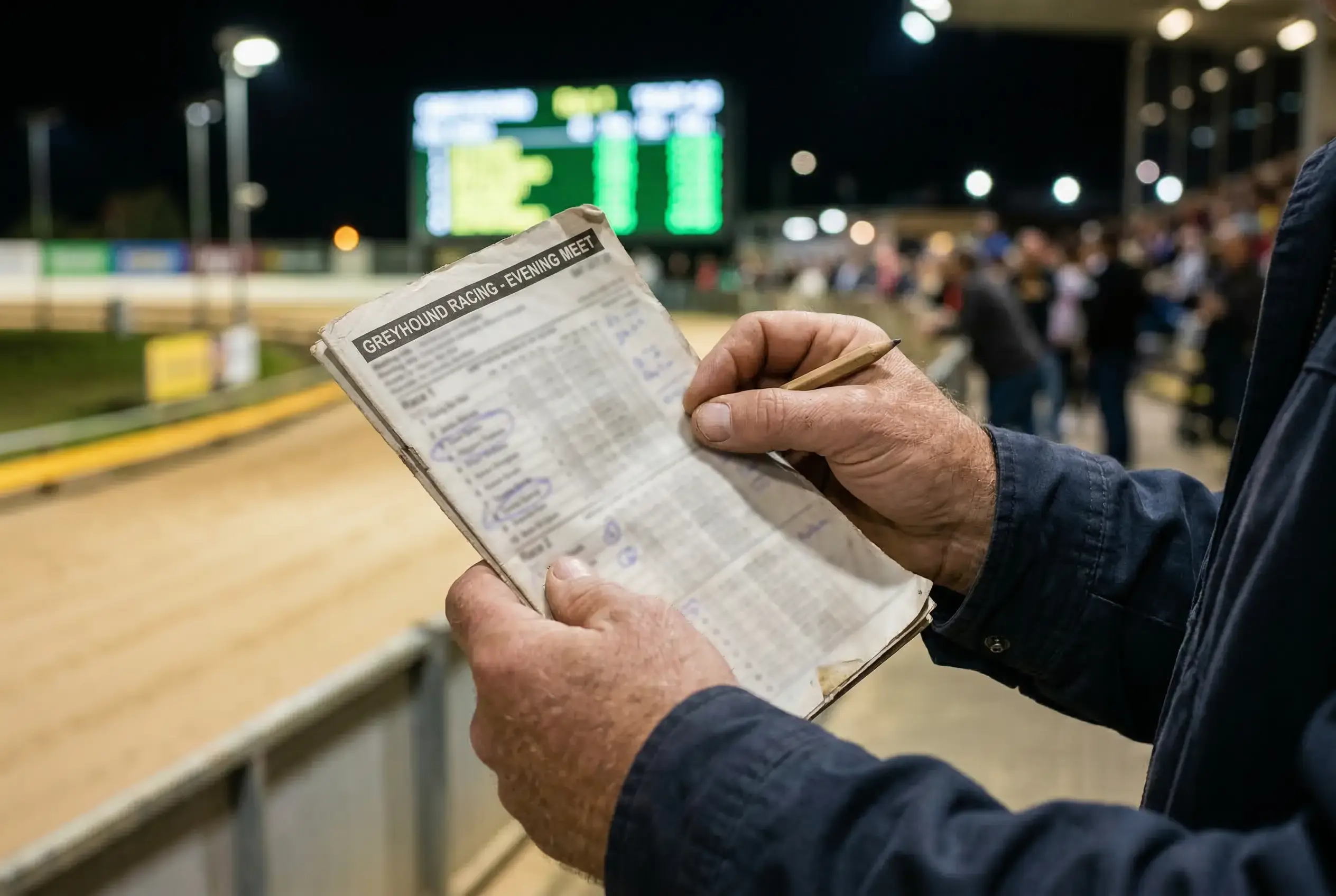
Newcastle greyhound results are generated on four days each week: Tuesday, Wednesday, Thursday and Saturday. That schedule has been broadly consistent for years, though the character of each race day varies depending on the meeting type, the audience it serves, and the commercial purpose behind it.
BAGS Meetings: Daytime Racing for Betting Shops
Midweek cards at Newcastle are predominantly BAGS meetings — Bookmakers Afternoon Greyhound Service. These are daytime fixtures designed to provide live betting content for high-street bookmakers and online operators. A typical BAGS meeting features 12 to 14 graded races, starting around 10:30 or 11:00 and running at 15-minute intervals. The racing is competitively graded but not usually headline stuff; think of it as the Championship to Saturday's Premier League. BAGS meetings are the financial backbone of most UK tracks, generating the bookmaker contributions that keep stadia open.
For punters studying Newcastle greyhound results, BAGS data is invaluable. The sheer volume of races — three or four meetings a week — produces a deep statistical sample. Trap bias data, sectional averages, and trainer patterns all emerge more clearly when you have hundreds of races per month to work with rather than a handful of marquee events.
Saturday Evening: The Social Card
Saturday evenings at Brough Park are different in tone and tempo. The card typically begins at 18:00 or 18:30 and runs through to around 22:00. Fields tend to be stronger, with open-race entries supplementing the graded programme. The crowd is bigger and more diverse — couples, groups, first-timers alongside the regulars. ARC has leaned into this, promoting Saturday fixtures as a night out rather than a pure betting experience.
Racing Club Membership in 2026
In early 2026, ARC launched its Racing Club Membership at Newcastle alongside Nottingham and Dunstall Park. Members get free admission, food and drink discounts, and "bring a friend" vouchers. It is a clear play to convert occasional visitors into regulars — people who will check Newcastle greyhound results because they feel invested in the track, not just the tote. For anyone attending more than a couple of times a month, the membership pays for itself almost immediately.
Meeting Calendar and Seasonal Patterns
Newcastle races throughout the year. Unlike horse racing, greyhound fixtures are not significantly affected by ground conditions — the sand surface drains well and maintains a consistent going in most weather. Holiday periods sometimes see adjusted schedules, and major events like the All England Cup bring additional meetings to the calendar. The spring 2026 programme is already confirmed, with centenary celebrations expected to feature prominently in the second half of the year as part of the GBGB's national 100 Years on Track campaign.
Brough Park Track Layout: Circumference, Surface and Hare
Understanding the physical characteristics of a greyhound track is as fundamental to reading Newcastle greyhound results as understanding the pitch dimensions at a football ground. Two dogs posting identical times at different venues are not running equivalent races. Track circumference, surface type, bend geometry, and hare style all influence how a race unfolds, which traps favour which running styles, and whether a greyhound's form translates from one track to another.
Circumference and Configuration
Brough Park has a circumference of 415 metres, which places it in the mid-range among UK greyhound venues. It is not a tight circuit like Monmore Green (380m) and not a galloping track like Towcester was before its closure, but something in between — a fair test that rewards both pace and stamina depending on the distance. The track has four bends, with the start positions and run-up distances varying by race distance. The standard sprint starts require a relatively short run to the first bend, which is why trap position matters so much at shorter distances.
Sand Surface
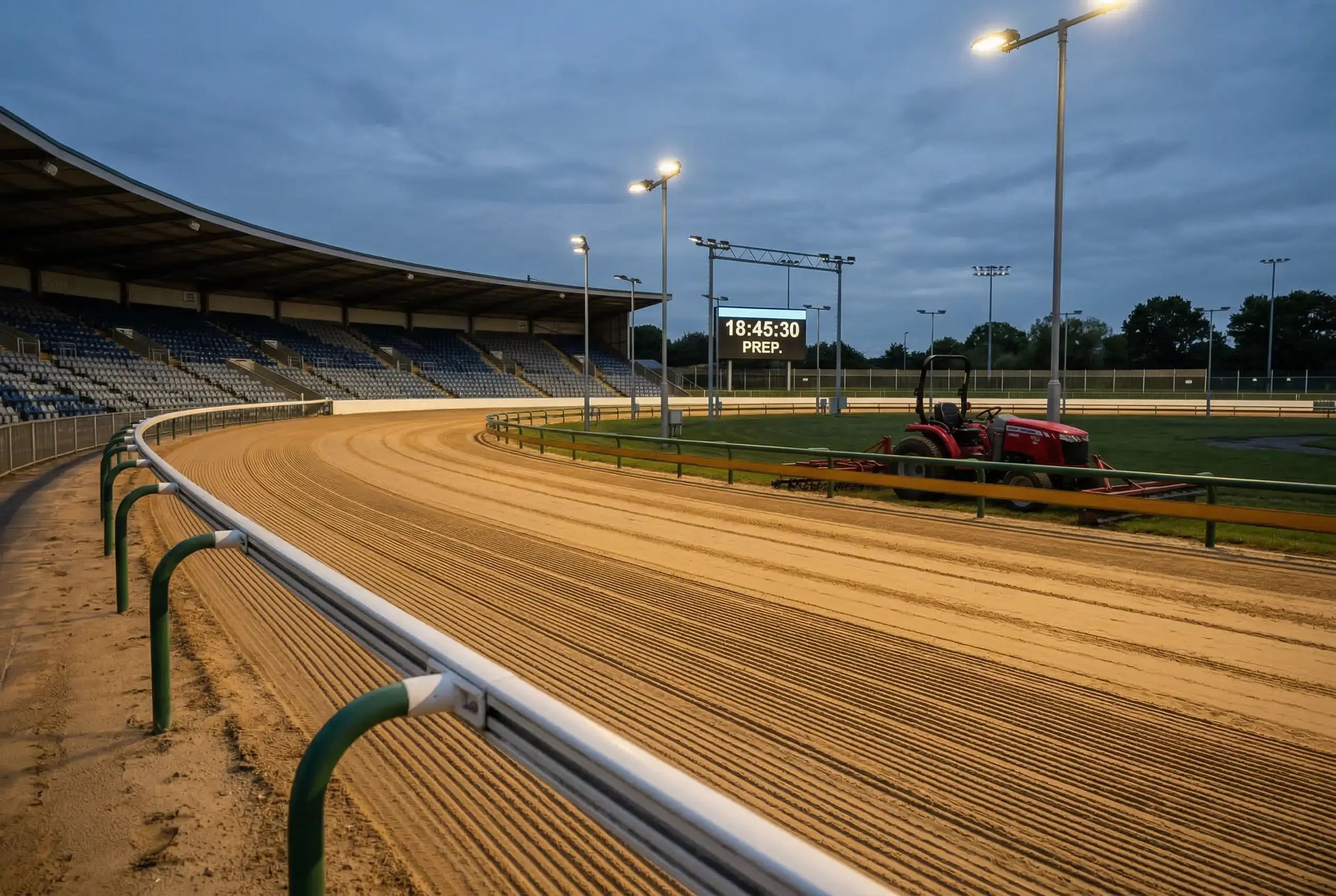
Newcastle runs on a sand surface, as do the majority of GBGB-licensed tracks in the modern era. Sand replaced the old grass and cinder tracks decades ago and is now the industry standard for several reasons: it drains quickly, it can be maintained to a consistent level, and it reduces the risk of certain leg injuries compared to harder surfaces. The going at Newcastle is recorded before each meeting and noted on the racecard — Fast, Normal, Slow, or Slow-to-Wet — depending on moisture content. The surface is prepared by a specialist team using grading machinery, and its condition directly affects race times. A "Fast" going will typically produce times 10 to 20 hundredths quicker than "Normal" over standard distances.
Newcastle is one of 18 GBGB-licensed stadia currently operating in the United Kingdom. Of those 18, it is the most northerly track in England and the principal venue in the North East region, with Sunderland (also ARC-operated, at a tighter 378m circumference) the nearest alternative.
The Hare
Brough Park uses a Swaffham hare — an outside-running rail-mounted lure that travels ahead of the dogs around the circuit. The hare operator controls the speed from a booth overlooking the track, adjusting pace to stay a consistent distance ahead of the leader. Hare control is a genuine skill; too fast and dogs disengage, too slow and you risk a pile-up on the bends. Experienced punters factor hare style into their form reading — some greyhounds chase more keenly when the hare runs a few lengths ahead, while others need it tight to maintain focus.
What the Track Means for Form
Brough Park's mid-range circumference and sand surface make it a track where early pace is rewarded but not dominant. Greyhounds that can get to the first bend in a strong position tend to do well, but the bends are not so sharp that a wide runner is automatically disadvantaged. When reading Newcastle greyhound results, pay attention to the run comment — a dog recorded as "led first bend to line" may have had a textbook front-running trip, while "challenged off bend three" suggests it came from off the pace, which is a different skill set entirely.
Newcastle Trap Bias: Win Percentages by Starting Position
If six greyhounds ran from six traps with no inherent advantage, each trap would win roughly 16.7% of races. That never happens. Every greyhound track has a measurable trap bias — a statistical tendency for certain starting positions to produce more winners than others — and Newcastle is no exception.
Why Trap Bias Exists
Trap bias arises from the geometry of the first bend. At most UK tracks, the first turn is a left-hander, which means the dog on the inside rail (trap 1) has the shortest run to the bend, while the dog widest out (trap 6) has to cover more ground and risks being forced even wider by the field funnelling into the turn. Over hundreds or thousands of races, this geometric advantage shows up clearly in the win percentages. It is not an absolute rule — fast dogs from wide draws win plenty of races — but it is a systemic tilt that any serious punter ignores at their peril.
Newcastle Trap Data
The most reliable source of current trap statistics for Newcastle is GreyhoundStats.co.uk, which publishes track-by-track data broken down by distance, race type (graded or open), and calendar year. The 2026 dataset is being updated continuously as races are run. As a general principle, traps 1 and 2 at Newcastle tend to outperform the theoretical average, while traps 5 and 6 tend to underperform. The exact percentages shift from year to year and from distance to distance — sprint races amplify the inside advantage because there is less time to recover from a slow start or a wide run, while stayers' races over 640m or 895m dilute it.
Comparative Context
To illustrate the scale of trap bias at a typical sand track, consider Hove, where data from over 2,800 races shows trap 1 winning 19.9% of the time compared to just 13.6% for trap 5. That is a gap of more than six percentage points — the difference between a value bet and a losing proposition if your price does not account for it. Newcastle's figures are broadly comparable, though the exact split varies by distance and season. The point is not to memorise one track's numbers but to understand that trap bias is measurable, consistent, and directly applicable to betting decisions.
Always check current trap statistics before betting at Newcastle. The numbers change by distance and year, but the structural advantage of inside traps is persistent and significant.
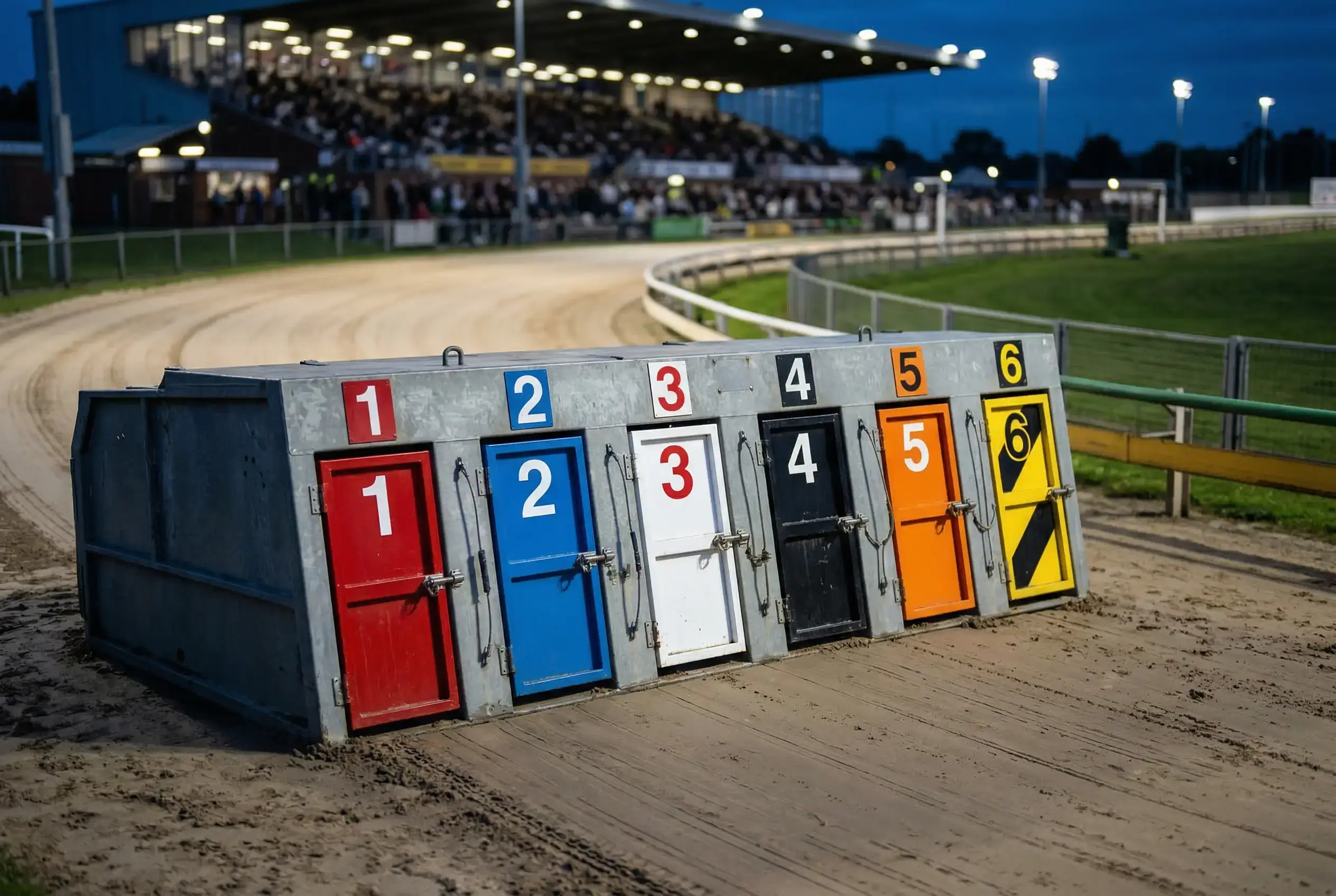
When analysing Newcastle greyhound results, cross-reference the trap draw with the finishing position. A dog that wins from trap 6 has done something statistically unusual, and the form value of that performance may be higher than a trap 1 winner who was simply gifted an uncontested lead into the first bend.
Trap Bias Value Calculator
Turn a trap's win rate into fair odds, then check the bookmaker's price for value. A fair share is 16.7% per trap (1 in 6) — anything above that is a real edge.
Value exists when the trap's win rate beats the probability the price implies. Win rates change by distance and year — take current figures from GreyhoundStats before betting. Editorial tool only; no bet is ever guaranteed.
Traps shown in standard GBGB jacket colours (1 red, 2 blue, 3 white, 4 black, 5 orange, 6 striped). Defaults are an inside-biased illustration for a Newcastle sprint — replace with current GreyhoundStats figures for the distance you're studying.
How to Read Newcastle Greyhound Results: Abbreviations Explained
A line of Newcastle greyhound results can look like encrypted text if you do not know the codes. It is not encrypted — it is compressed. Every abbreviation carries specific information about how a race unfolded, and learning to decode them turns a string of letters and numbers into a narrative of the race. Here is the full breakdown.
Finishing Positions and Distances
The most basic element is the finishing order: 1st through 6th (or however many runners). Alongside each position you will see the distance beaten, measured in lengths. A "length" in greyhound racing is approximately 0.08 seconds, though it varies by race speed. Common notations include: Nk (neck, about a quarter of a length), SH (short head, less than a neck), Hd (head, roughly half a length), 1 (one length), 1½ (one and a half lengths), 2¼ (two and a quarter lengths), and DIS (distance, meaning the gap was too large to measure precisely, usually 15+ lengths).
Run Comments
The run comment is the most informative part of a result for form students. It is a shorthand account of the dog's race, written by the race commentator or result compiler. Common abbreviations include:
| Abbreviation | Meaning |
|---|---|
| EP | Early pace — showed speed from the traps |
| QAw | Quick away — trapped fast |
| SlAw | Slow away — missed the break |
| Led | Led the field at some point |
| Crd | Crowded — impeded by other runners |
| Bmp | Bumped — physical contact during the race |
| RnW | Ran wide — drifted outward on the bends |
| SAw | Stumbled away — lost ground at the start |
| Chl | Challenged — made a bid for the lead |
| Fin | Finished — used to describe closing effort |
| MsdBrk | Missed break — very slow from traps |
| Ck | Checked — had to shorten stride to avoid trouble |
Sectional and Run Times
Newcastle results include the overall run time for each greyhound, measured in seconds and hundredths. Some results also carry a sectional time — the time taken to reach a specific point on the track, typically the first bend or a mid-race marker. Sectional times are valuable because they separate early pace from finishing speed. A dog that posts a fast sectional but a slow overall time may have been impeded on the bends; a dog with a slow sectional but fast overall time has come from behind and finished strongly.
Weight and Starting Price
Each greyhound's racing weight is recorded in kilograms and displayed in the result. Weight fluctuations of more than a kilogram between races can indicate fitness changes, and some trainers deliberately manage weight in the days before a race. The starting price (SP) is the official odds at the time the hare is set running. It appears as a fraction (5/2, 7/4, 11/8) or as a decimal, depending on the platform. The SP is the benchmark against which punters measure whether they got value — if you backed a dog at 4/1 and the SP was 2/1, you got a good price.
Putting It Together
A complete Newcastle result line might read something like: "T2, Ballymac Thunder, 1st, EP Led, 29.47, 32.5kg, 5/2F." That tells you the dog trapped from box 2, showed early pace, led throughout, ran the distance in 29.47 seconds, weighed 32.5 kilograms, and went off as the 5/2 favourite. That single line contains enough information to assess the performance, compare it with previous runs, and form an opinion on future prospects.
Race Distances at Newcastle: From 290m Sprints to 895m Marathons
Not all greyhound races are the same distance, and at Newcastle the range is wide enough to test completely different athletic profiles. Brough Park stages races over five primary distances, each demanding a distinct combination of speed, stamina, and tactical ability. Understanding these distances is fundamental to reading Newcastle greyhound results accurately, because a dog's form over 290 metres tells you almost nothing about its ability over 640.
290 Metres: The Sprint
This is the shortest distance at Newcastle and it is essentially a drag race. Two bends, maximum acceleration, minimal opportunity to recover from a bad break. Sprint results are dominated by early pace — the dog that traps fastest and reaches the first bend in front wins far more often than at any other distance. Trap bias is most pronounced here, and the margins are measured in tenths of a second.
480 Metres: The Standard
The 480-metre trip is the bread and butter of British greyhound racing. Most graded races at Newcastle are run over this distance, which involves a full circuit plus a short run-in. It is a distance that rewards a balance of pace and stamina, and it generates the deepest pool of form data for comparison. If you are studying Newcastle greyhound results for the first time, start with the 480m races — the sample sizes are larger and the form is more reliable.
500 Metres
A slightly longer variant of the standard trip, the 500m distance adds an extra 20 metres to the run. It does not fundamentally change the character of the race, but it gives slightly more time for a dog running off the pace to make up ground. Some trainers prefer this distance for greyhounds that have a strong closing kick but lack the raw trap speed to dominate at 480m.
640 Metres: Middle Distance
At 640 metres, the race dynamic shifts significantly. This is a two-lap event requiring genuine stamina as well as speed. Early pace still matters, but a dog that burns too much energy getting to the front can fade in the closing stages. Results over 640m often feature more positional changes during the race, and the run comments become more varied — look for codes like "led to bend 6, headed approaching line" to identify dogs that lack the stamina for the trip.
895 Metres: The Marathon
The longest distance at Brough Park, 895m races are comparatively rare and attract specialist stayers. These races cover more than two full laps and are a genuine test of endurance for a breed built primarily for speed. The results look different: winning times are obviously longer, but the finishing distances between dogs tend to be wider as well, because the stamina gap between a true stayer and a dog being tried over a trip it cannot handle is large and unforgiving.
A top-class greyhound can reach speeds above 40 mph within a few strides of the traps, but sustaining anything close to that pace over 895m is physically impossible. Stayers' races at Newcastle test deceleration management as much as raw speed.
Brough Park Since 1928: A Brief History of Newcastle Greyhounds
The story of greyhound racing at Newcastle begins on 23 June 1928, when Brough Park opened its doors to the public for the first time. The first race was won by a dog named Marvin, who started at odds of 3/1. It was two years after the sport's official British debut at Belle Vue, Manchester, and the North East took to it immediately. Brough Park became a community fixture — a place where shift workers, families, and serious gamblers rubbed shoulders on the terraces.
The Post-War Boom and Derby Champions
Greyhound racing hit its peak attendances across Britain in the late 1940s and 1950s, and Newcastle was no exception. In 1946, Brough Park hosted a race that will never be seen again: the All England Cup that year featured the champions of all four national Derbies — the English, Irish, Scottish and Welsh winners all lined up at Newcastle, with the English Derby champion Mondays News coming out on top in the final. The crowds were enormous by modern standards, with tens of thousands turning up for Saturday evening cards. The sport rivalled football as a spectator attraction in working-class communities, and Newcastle's industrial workforce provided a ready-made audience.
Trainers Championship and the Sand Conversion
In 1977, Brough Park launched the Trainers Championship, a competition that gave Newcastle its own flagship event and put the track's top professionals in direct rivalry. Three years later, the track converted from a grass surface to sand — a transition that most UK tracks underwent during the 1970s and 1980s. Sand offered better drainage, more consistent going, and lower maintenance costs. It also changed the way races were run; dogs had to adapt to a different surface grip, and some trainers who had mastered grass conditions took time to adjust.
Corporate Ownership: William Hill and ARC
Like many British greyhound tracks, Brough Park passed through several hands during the late twentieth and early twenty-first centuries. William Hill acquired the stadium as part of a wider portfolio, running it as both a racing venue and a betting operation. In 2003, the focus shifted towards modernising the facilities, though investment was always constrained by the economics of a sport whose attendances had declined sharply from the post-war peak.
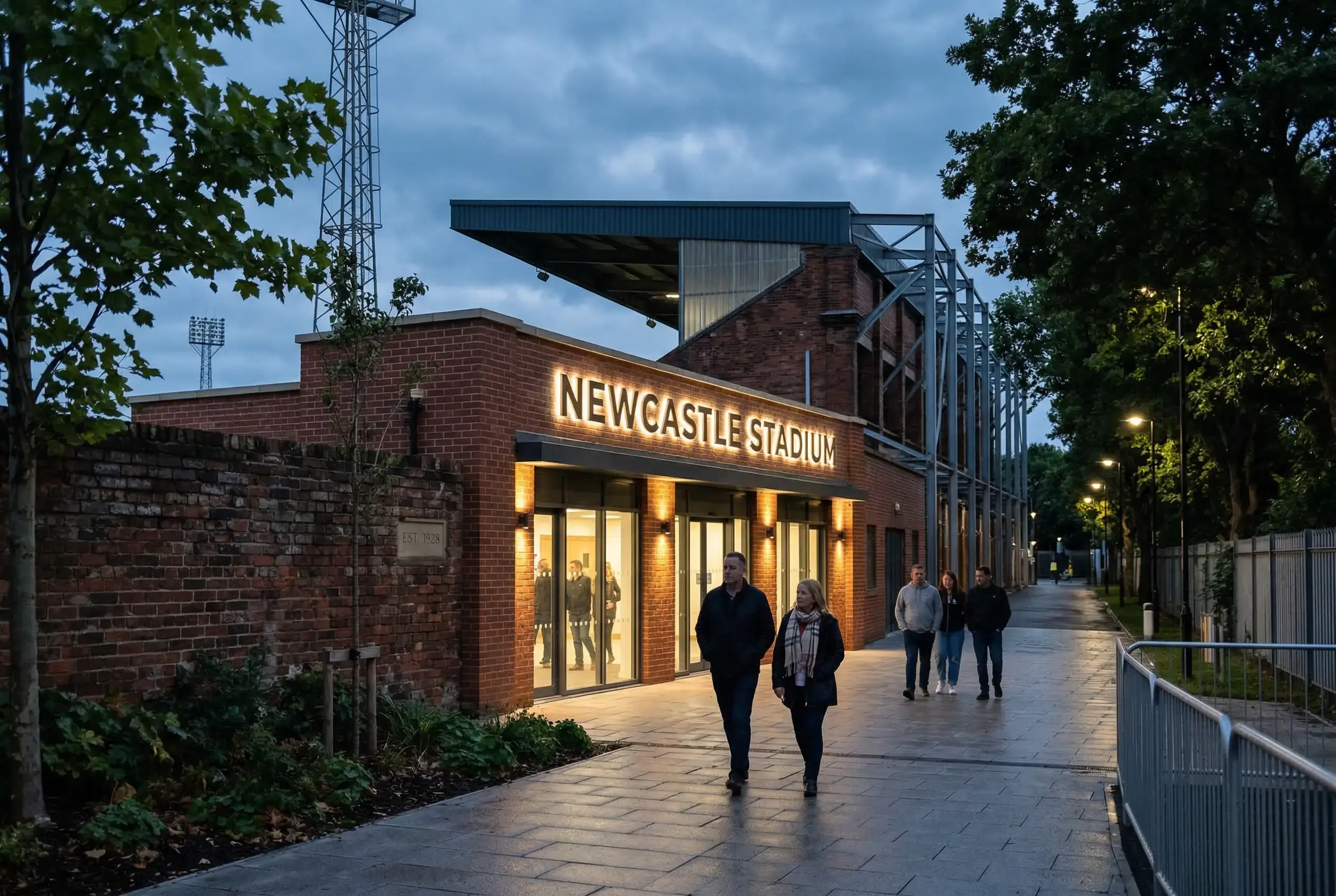
The transformative moment came in 2017, when Arena Racing Company acquired Newcastle and Sunderland from William Hill. ARC brought a different philosophy — operating greyhound stadia as live entertainment venues, not just betting shops with a track attached. Investment in facilities, marketing, and the race-night experience followed, and the results have shown in the attendance figures.
The Centenary Era
As greyhound racing enters its centenary year in 2026, Brough Park approaches its 98th season. GBGB Chief Executive Mark Bird has framed the milestone as a springboard: "Greyhound racing has always been a sport that brings families and communities together and we look forward to celebrating our centenary with as many as possible." For a track that has survived depressions, wars, declining attendances and multiple changes of ownership, that is not empty rhetoric — it is a description of what Brough Park has been doing since the night Marvin crossed the line first.
All England Cup and Major Races at Newcastle Stadium
Newcastle is not just a venue for everyday graded racing. Brough Park hosts some of the most prestigious greyhound events outside the Derby circuit, and the track's flagship competitions attract entries from across Britain and Ireland. The Newcastle greyhound results generated on these nights carry weight well beyond the North East.
The All England Cup
The All England Cup was established at Brough Park in 1938 and has been a centrepiece of the Newcastle calendar ever since. Sponsored by Premier Greyhound Racing since 2022, the competition currently awards £20,000 to the winner — a serious prize fund by UK greyhound standards and one that attracts the country's top open-class greyhounds. The competition runs through qualifying rounds to a six-dog final, and the final night regularly draws the biggest crowd of the year at Brough Park.
The 2025 All England Cup provided a reminder of what this event means to the sport locally. Footfall on finals night was up 85% compared to the previous year, and the quality of the field was reflected in the market — short-priced favourites and a deeply competitive final that went to the wire. Ian Walton, General Manager of Newcastle Stadium, spoke about the night with evident pride, calling long-serving figures like Jimmy Wright and Angela Harrison "legends of the track here in Newcastle."
The Northern Flat
The Northern Flat is the other marquee event at Brough Park, carrying a prize of £10,000 for the winner. It is the primary open-race competition for the northern circuit, and it draws a different kind of entry to the All England Cup — often faster, more sprint-oriented dogs who relish the 480m trip. The Northern Flat has historically produced some of the quickest times recorded at Newcastle, and winning it is a significant milestone for any greyhound's career.
Northern Puppy Derby
The Northern Puppy Derby, also worth £10,000 to the winner, is run for younger greyhounds and serves as a proving ground for the next generation of top-class dogs. Brough Park is one of only a handful of venues nationally to host a puppy classic at this level, and the results of the Northern Puppy Derby are closely watched by trainers and owners looking for future open-class prospects.
Wicky Ned: Greyhound of the Year 2024
The Newcastle connection to the top of the sport was underlined in 2025, when Wicky Ned was named GBGB Greyhound of the Year for 2024. Trained by Jimmy Fenwick at Newcastle, Wicky Ned won both the All England Cup and the Northern Flat in 2024 — a double that few dogs in history have managed. Fenwick, a local trainer with decades of experience at Brough Park, was characteristically understated about the achievement but also ambitious: "I think we have a good team now to take on the Irish in the English Greyhound Derby." That is the confidence of a man whose Newcastle greyhound results speak for themselves.
Wicky Ned's 2024 double — All England Cup and Northern Flat in the same season — made him only the third dog in the last decade to claim both of Newcastle's premier open-race titles.
Greyhound Welfare at Newcastle: Injury Rates, Rehoming and Oversight
No honest discussion of greyhound racing can avoid the welfare question. Newcastle greyhound results are generated by living animals running at high speed on a sand track, and the sport carries inherent physical risk. The question is not whether injuries happen — they do — but how the industry measures, manages, and minimises them. The data, at least in the licensed sector, is more transparent than it has ever been.
Injury Rates: The Numbers
The Greyhound Board of Great Britain publishes annual injury and retirement data covering all licensed tracks, including Newcastle. In 2024, the overall injury rate across GBGB tracks was 1.07% — meaning 3,809 injuries from 355,682 individual race runs. That is the lowest rate since GBGB began publishing this data in 2018, and it represents a sustained downward trend. The vast majority of recorded injuries are minor — muscle strains and foot damage that require rest rather than surgery.
Fatality rates tell a sharper story. In 2024, the on-track fatality rate was 0.03%, half what it was in 2020. To put that in context: in a typical 12-race meeting at Newcastle with six dogs per race, the statistical probability of a fatal incident on any given night is extremely low. It is not zero — and that matters — but the direction of travel is unmistakably positive.
Rehoming: Life After Racing
What happens to greyhounds when they stop racing is arguably the most scrutinised aspect of the sport's welfare record. In 2024, 94% of greyhounds leaving the licensed racing population were successfully rehomed — 5,795 dogs finding homes through a combination of the Greyhound Trust, independent rehoming charities, and direct placement by trainers and owners. That figure was 88% in 2018, so progress has been real.
The most dramatic improvement has been in economic euthanasia — the practice of putting a healthy greyhound down because the cost of rehoming or continued care was deemed too high. In 2018, 175 dogs were euthanised for economic reasons across GBGB tracks. In 2024, the number was three. GBGB Chief Executive Mark Bird has been vocal about this shift: "We made it clear that economic euthanasia is unacceptable, and I am proud that we have reduced it by 98% since 2018."
The Critical View
Not everyone is satisfied. Lisa Morris-Tomkins, Chief Executive of the Greyhound Trust, the sport's principal rehoming charity, has pushed for faster progress: "The number of racing greyhounds that never get the chance to find a loving home after their careers end is unacceptable. The baseline injury and rehoming figures must improve." That tension between the sport's governing body and its welfare partners is not a sign of dysfunction — it is a feature of a system where external scrutiny keeps pressure on the industry to do better.
Anti-racing organisations point to cumulative numbers. Between 2017 and 2024, GBGB data records 35,168 injuries and 1,353 fatalities across all licensed tracks. Those are the raw totals, and they carry weight even as the annual rates decline. The debate over whether regulated racing with improving welfare metrics is acceptable, or whether the inherent risk to animals makes the sport indefensible, is not going to be settled in a race result. But the data is at least on the table.
Oversight and Kennel Inspections
Since launching its "A Good Life for Every Greyhound" strategy in 2022, the GBGB has increased routine kennel inspection visits by 73.2%. Inspectors check housing conditions, feeding regimes, exercise routines, and veterinary records. Tracks — including Newcastle — are subject to separate facility inspections, and GBGB stewards attend every licensed meeting to enforce rules on running, kennelling, and post-race care.
For anyone following Newcastle greyhound results with an eye on the broader health of the sport, the welfare numbers are the foundation. Everything else — betting turnover, footfall, prize money, media rights — depends on public confidence that the dogs are being looked after. The data says the trend is positive. The critics say it is not fast enough. Both statements can be true at the same time.
UK Greyhound Racing in Numbers: Betting Turnover, Stadia and Registrations
Newcastle greyhound results do not exist in isolation. They are generated within an industry that has its own economic ecosystem — one driven primarily by betting revenue, dependent on a shrinking network of licensed tracks, and facing structural challenges that no amount of centenary celebrations can paper over entirely.
Betting Turnover
Gambling Commission data shows that retail betting turnover on greyhound racing reached £794 million in the year ending March 2024. That is a substantial figure, but the trend line is unflattering. Adjusted for inflation, betting turnover on dogs has fallen by 23% over the past three years. The migration from high-street bookmakers to online and mobile platforms has diluted the sport's commercial position, because online punters have a universe of betting products competing for their attention — in-play football, virtual racing, casino games — and greyhounds do not always win that battle.
Mark Moisley, Commercial Director of the GBGB, has been blunt about the challenge: "Revenue from bookmakers is declining year-on-year and has done for a number of years." That decline has a direct knock-on effect at venues like Newcastle, because BAGS meeting fees and bookmaker contributions to the British Greyhound Racing Fund are the primary revenue streams that keep tracks operational.
Stadia and Infrastructure
The UK currently has 18 GBGB-licensed greyhound stadia. That number has been shrinking for decades — in the 1940s, there were more than 70. Each closure removes a racing venue, a meeting schedule, and a source of employment. Newcastle, as one of ARC's five greyhound venues and the primary track in the North East, occupies a relatively secure position within this contracting landscape, but the wider trend casts a shadow.
The licensed sector employs approximately 500 trainers, 3,000 kennel staff, 700 track officials, and supports around 15,000 registered owners. These are not large numbers in the context of the national economy, but they represent a concentrated workforce in specific regions — and in the North East, Brough Park is the hub.
Registrations
New greyhound registrations with the GBGB have declined from 6,769 in 2021 to 5,133 in 2024 — a drop of roughly 24%. Within that total, the share of British-bred greyhounds has risen from 13.1% to 15.5%, while Irish imports have fallen by 26%. The supply of racing greyhounds is tightening, which has implications for field sizes, meeting frequency, and the variety of racing available at tracks like Newcastle. Fewer dogs means fewer races, which means less content for bookmakers, which means less revenue flowing back to the sport. It is a cycle that the industry has not yet found a way to break.
The numbers paint the picture — now here is how to be part of it in person.
Getting to Newcastle Greyhound Stadium: Metro, Bus and Parking
Brough Park is in Byker, approximately two miles east of Newcastle city centre. It is well connected by public transport and has on-site parking for those arriving by car.
Metro
The nearest Tyne and Wear Metro station is Byker, which is on the green line and approximately a 10-minute walk from the stadium entrance. From Newcastle Central Station, the journey takes around eight minutes. Monument and Haymarket stations on the same line offer connections from other parts of the network. On race nights, the walk from Byker station along Shields Road is straightforward and well-lit.
Bus
Several Go North East bus routes serve the Byker area, with stops on Shields Road within walking distance of the track. Routes from the city centre, Wallsend, and North Shields all pass through the area. Journey times from the Eldon Square bus station in central Newcastle are typically 15 to 20 minutes depending on traffic.
Driving and Parking
For those arriving by car, the stadium postcode is NE6 2XJ. Brough Park has its own car park, which is free on race nights and generally has sufficient capacity for midweek meetings. Saturday evenings can fill up more quickly, so arriving 30 to 45 minutes before the first race is advisable. The A193 (Shields Road) provides the most direct route from the city centre and the A1058 Coast Road.
Admission and What to Expect
Standard admission prices vary by meeting type, with Saturday evening cards typically priced slightly higher than midweek BAGS meetings. The ARC Racing Club Membership, launched in 2026, offers free admission for members alongside food and drink discounts — a worthwhile investment for anyone planning regular visits. Racecards are available for purchase at the entrance and contain the full card, form lines, and trap draws for every race on the programme. The stadium has bar and catering facilities, a tote betting area, and a viewing terrace overlooking the track.
Frequently Asked Questions About Newcastle Greyhounds
What days does Newcastle greyhound racing take place?
Newcastle greyhound racing runs on four days each week: Tuesday, Wednesday, Thursday and Saturday. Midweek meetings are predominantly BAGS fixtures — daytime cards that start around 10:30 or 11:00 and provide live betting content for bookmakers. These graded races run at approximately 15-minute intervals across 12 to 14 races. Saturday evenings are a different proposition: the card typically begins at 18:00 or 18:30 and features stronger fields with open-race entries alongside the graded programme. The Saturday card is marketed as a social event as well as a betting fixture, attracting a broader audience. The schedule runs year-round with minimal seasonal disruption, thanks to the sand surface which drains effectively in wet weather. Bank holidays and major competitions such as the All England Cup may bring additional meetings or adjusted start times.
What distances are raced at Newcastle and what is the track layout?
Brough Park has a circumference of 415 metres and runs on a sand surface with a Swaffham outside hare. Races are staged over five distances: 290m (sprint), 480m (standard), 500m (intermediate), 640m (middle distance) and 895m (marathon). The 480m distance produces the most races and the deepest form data, while 290m sprints and 895m stayers' events are less frequent and attract specialist types. The track has four bends, and the first turn is a left-hander, which gives inside traps a geometric advantage — particularly at shorter distances where there is less time to recover from a wide run. Run-up distances vary by starting position, and the going is assessed before each meeting and recorded on the racecard as Fast, Normal, Slow, or Slow-to-Wet.
What do the abbreviations and numbers in greyhound results mean?
Greyhound result lines are dense with shorthand. The key elements are: trap number (T1–T6, indicating the starting box), finishing position, distance beaten in lengths (where Nk means a neck, SH is a short head, and Hd is a head), run time in seconds, sectional time to a mid-race point, racing weight in kilograms, and starting price (SP) in fractional or decimal odds. The run comment is the most analytically useful part — abbreviations like EP (early pace), QAw (quick away), SlAw (slow away), Crd (crowded), Bmp (bumped), RnW (ran wide), Ck (checked), and Led describe how the race unfolded for each dog. Combining the run comment with the time and finishing distance lets you judge whether a result was better or worse than it looks on paper. A dog that finished third but was crowded on the first bend may be better value next time than the winner who had a clear run.
