 Available in US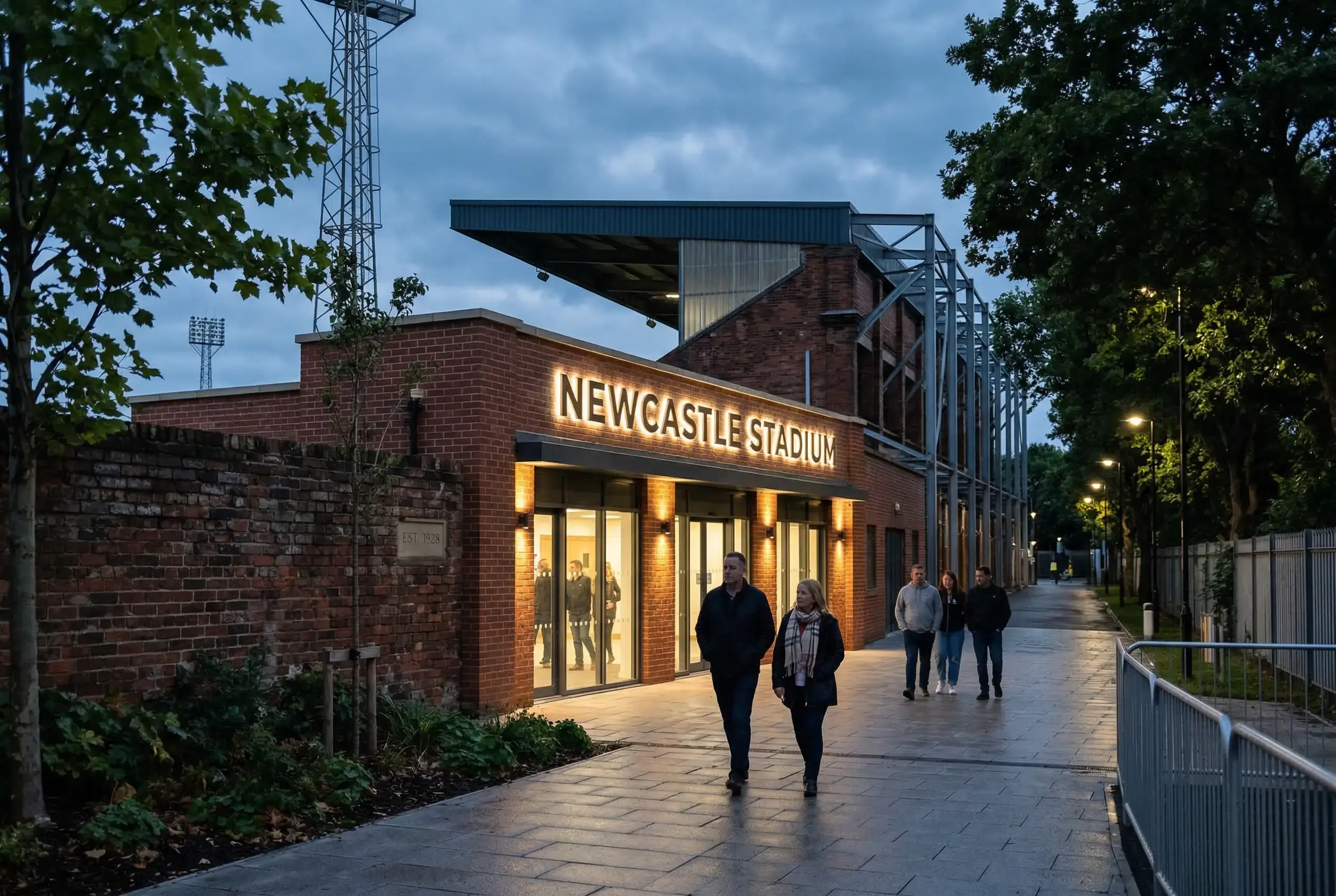
Brough Park: Nearly a Century of Greyhound Racing in Byker
The history of Brough Park is the history of greyhound racing in the North East. The stadium opened on 23 June 1928, just two years after the first licensed greyhound meeting was held at Belle Vue in Manchester. A greyhound called Marvin won the inaugural race at odds of 3/1, and the crowd that turned out in the Byker neighbourhood of Newcastle that evening had no way of knowing they were witnessing the start of something that would still be running nearly a century later.
Brough Park has survived depressions, wars, ownership changes, surface conversions, corporate takeovers and the steady contraction of the sport it hosts. In 2026, as UK greyhound racing marks its centenary, the stadium is owned by Arena Racing Company and operates four nights a week on a sand circuit that bears almost no physical resemblance to the grass track where Marvin ran. The identity, though, endures. Brough Park is Newcastle’s greyhound stadium, and the history of Brough Park is inseparable from the community that has supported it through every era.
See also: newcastle greyhound results — Newcastle greyhound tips and results.
Opening Night in 1928 and the Pre-War Era
Greyhound racing arrived in Britain in 1926, and within two years the sport had spread from its Manchester origins to cities across the country. Newcastle Stadium at Brough Park opened its doors on 23 June 1928, making it one of the earliest purpose-built greyhound tracks in the North East. The location in Byker, an industrial working-class neighbourhood east of the city centre, was no accident. Greyhound racing was built for a working-class audience — affordable, accessible and offering the chance to gamble in a social setting that pubs and bookies’ shops could not match.
The early years at Brough Park were shaped by the same forces that drove greyhound racing across the country: mass unemployment, limited entertainment options and an appetite for excitement that the sport delivered in short, sharp bursts. Meetings drew large crowds, and the track quickly established itself as a fixture in Newcastle’s sporting calendar. The pre-war era also saw the establishment of major races that would become part of the stadium’s identity, laying the groundwork for the All England Cup, which was formally inaugurated in 1938 and remains the track’s signature event to this day.
The track’s location in Byker gave it a distinct character from the start. This was not a stadium on the outskirts of the city, accessible only by car. It was embedded in the community, walkable from surrounding streets, and its audience reflected the neighbourhood: working families, factory workers, couples on a Saturday night out. That proximity between the track and its audience shaped the culture of Brough Park in a way that lasted for decades.
The Second World War disrupted racing at Brough Park, as it did everywhere. Some tracks closed entirely for the duration; others operated on reduced schedules. Newcastle’s stadium survived the war years and emerged into the post-war period as one of the North East’s principal entertainment venues, ready to capitalise on the boom that was about to follow.
Post-War Boom, Derby Champions and the All England Cup
The late 1940s and 1950s were the golden age of British greyhound racing, and Brough Park shared fully in the boom. Attendances across the sport peaked in 1946, when an estimated 75 million visits were made to greyhound tracks nationwide. Newcastle benefited from the general enthusiasm, and the stadium became a Saturday night institution for families, couples and groups of friends in the Byker area and beyond.
During this period, Newcastle produced greyhounds that competed at the highest level nationally. The track sent runners to the English Greyhound Derby and other prestige events, and several dogs trained in the North East achieved recognition on the national stage. The All England Cup, held annually at Brough Park since 1938, grew in stature and prize money, attracting entries from across the country and cementing Newcastle’s reputation as a venue capable of staging elite competition.
The post-war decades were not without challenges. Attendances began to decline from the mid-1960s onward, as television, changing leisure habits and the legalisation of off-course betting in 1961 drew audiences away from the trackside. The ability to place a bet without physically attending the stadium removed one of the key incentives for turning up, and Brough Park, like every other greyhound stadium, had to adapt. The track invested in facilities, adjusted its schedule and leaned into the social side of the experience — the restaurant, the bar, the group bookings — to maintain relevance in a changing entertainment landscape.
Through it all, the racing continued. The Trainers Championship, introduced at Newcastle in 1977, added another layer to the competitive calendar. The stadium’s ability to host both graded racing for the everyday programme and open events of national significance gave it a dual identity: a community track for locals and a competition venue for the wider sport.
William Hill, the Sand Switch and ARC Ownership
The modern era at Brough Park is defined by two major transitions: the conversion from grass to sand and the change in corporate ownership. The surface switch, completed in the 1980s, brought Newcastle into line with the majority of UK tracks that were moving away from natural turf. Sand offered a more consistent racing surface, lower maintenance costs and — critically — better drainage, which reduced the number of meetings lost to waterlogging. The trade-off was that the character of the racing changed. Dogs that had excelled on grass did not necessarily thrive on sand, and the track record book was effectively reset.
Learn about the 2026 centenary of UK greyhound racing.
In 2003, William Hill acquired Newcastle Stadium as part of a broader portfolio of greyhound venues. The bookmaker operated the track for over a decade, maintaining the racing programme but investing modestly in the physical infrastructure. The William Hill era was stable rather than transformative — the track ran, the dogs raced, the crowds came on Saturday nights, but the vision for what Brough Park could become was largely absent. The stadium functioned, but it did not evolve.
That changed in 2017, when Arena Racing Company purchased Newcastle and Sunderland Greyhound Stadium from William Hill. ARC brought a different approach: centralised media rights deals, cross-promotion across its portfolio of sixteen racecourses and five greyhound stadia, and a focus on growing footfall through membership schemes and event-night programming. The Entain–ARC media rights joint venture, covering twelve stadia from 2024 to 2029, ensured that Newcastle’s racing was distributed more widely than ever, reaching digital audiences through streaming platforms integrated with major betting operators.
As GBGB CEO Mark Bird noted when discussing the sport’s centenary in 2026, the anniversary offers an opportunity not just to reflect on the past but to look forward with confidence. For Brough Park, that forward look includes the ARC Racing Club Membership launched in 2026, continued investment in facilities and the ongoing challenge of attracting new audiences to a sport that has been part of Newcastle’s fabric for nearly a hundred years. The stadium’s capacity to adapt — from grass to sand, from independent ownership to corporate stewardship, from trackside crowds to digital streaming — is the thread that connects Marvin’s first win in 1928 to whatever comes next.
