
 Available in US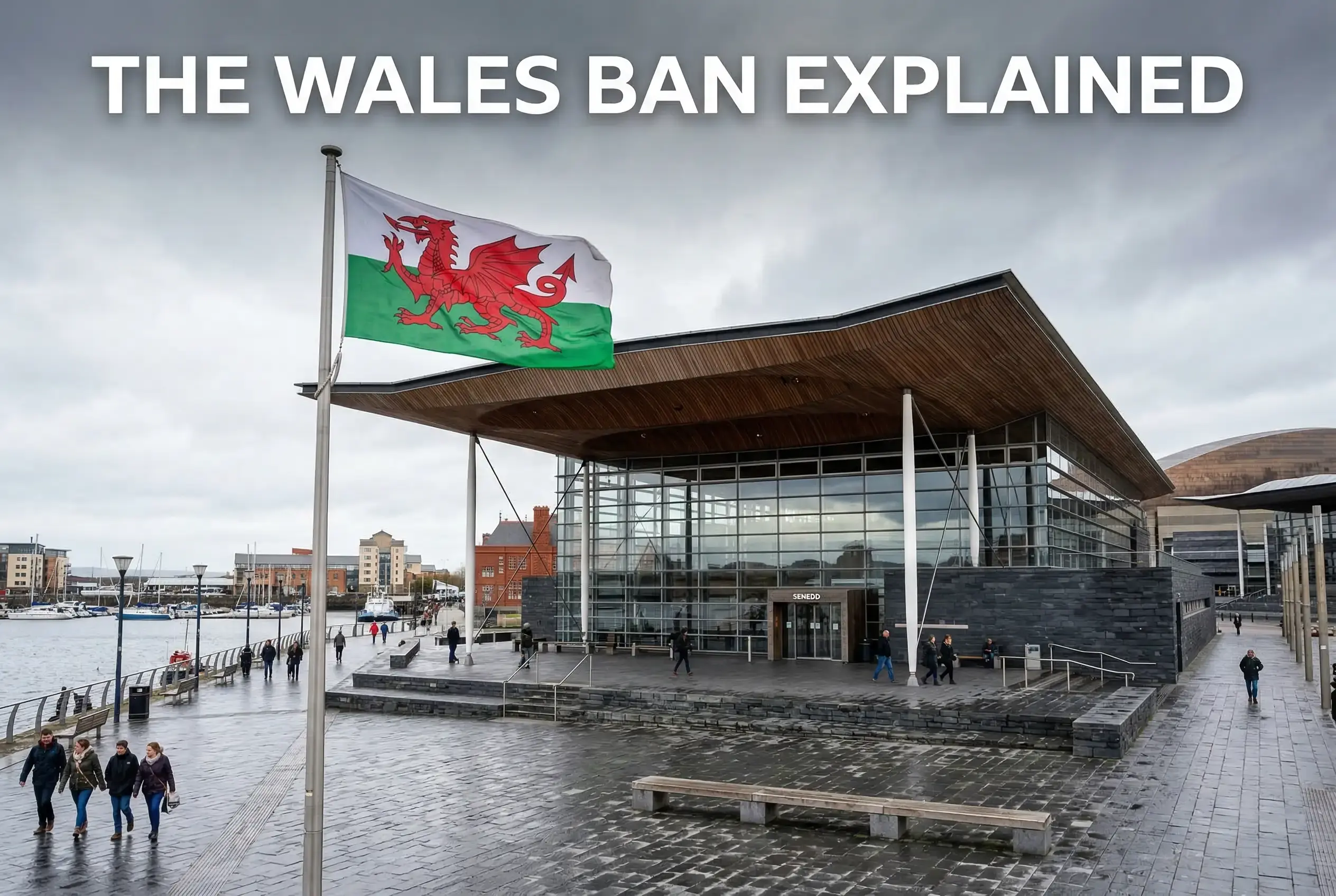
The Senedd Bill That Could End Greyhound Racing in Wales
On 29 September 2025, the Prohibition of Greyhound Racing (Wales) Bill was introduced in the Senedd — the Welsh Parliament. On 16 December 2025, the general principles of the bill were approved by a vote of 36 to 11. If the bill completes its remaining legislative stages, greyhound racing will become illegal in Wales, with a ban taking effect no earlier than April 2027 and no later than April 2030. The Wales greyhound racing ban would be the first prohibition of the sport in any part of the United Kingdom.
The bill applies to one track: Valley Greyhound Stadium, the only GBGB-licensed venue in Wales. But its implications extend far beyond a single stadium. If Wales bans greyhound racing, it establishes a legislative precedent that campaigners in England and Scotland could use to build momentum for similar measures. For the wider UK greyhound racing industry, the Welsh bill is not a local issue. It is a signal.
See also: newcastle greyhound results — your complete Newcastle greyhound resource.
Legislative Timeline: From Introduction to Expected Enactment
The Prohibition of Greyhound Racing (Wales) Bill followed the standard Welsh legislative process. It was introduced as a Member Bill by the Welsh Government, with cross-party support from Members of the Senedd who had campaigned on animal welfare grounds. Stage 1, the debate on general principles, took place on 16 December 2025. The result — 36 votes in favour, 11 against — was decisive, reflecting a clear majority in the Senedd for the principle that greyhound racing should not continue in Wales.
Stage 2 of the legislative process involves detailed scrutiny of the bill by a Senedd committee. This stage allows for amendments and technical refinements. Stage 3 is the final debate and vote by the full Senedd. If the bill passes Stage 3, it receives Royal Assent and becomes law. The bill as drafted provides for a transition period: the ban would not take effect immediately upon enactment but would allow a window — between April 2027 and April 2030 — for the industry to wind down operations at Valley Greyhound Stadium.
The transition period is designed to give trainers, staff and the stadium itself time to adjust. Dogs currently racing at Valley would need to be rehomed or transferred to tracks in England. Staff would face redundancy or relocation. The stadium’s future use would need to be determined. These practical questions are live issues that the Stage 2 committee process is expected to address in detail.
For the sport more broadly, the pace of the legislative process matters. A bill that moves quickly through its remaining stages sends a message that the political will in Wales is firm and that opposition has limited leverage. A slower process, with contested amendments and extended committee hearings, would suggest that the outcome is less certain — though the Stage 1 margin of 36 to 11 leaves little doubt about the direction of travel.
Arguments For and Against: What Each Side Says
The case for the ban rests primarily on animal welfare. Huw Irranca-Davies, Deputy First Minister of Wales, stated during the Senedd debate that greyhound racing on a track carries an inherent risk of collisions, falls and high-speed injuries, and that ending the sport would make the animals safer. This framing treats the risk as inseparable from the activity: no amount of regulation, the argument goes, can make racing greyhounds on a track safe enough to justify continuing.
Supporters of the ban also point to the broader trajectory of animal welfare legislation. The argument is that society’s tolerance for using animals in entertainment and gambling has been declining for years, and that greyhound racing — like foxhunting before it — will eventually be seen as incompatible with modern standards. The Welsh bill, in this view, is not premature; it is overdue.
The case against the ban comes primarily from the greyhound racing industry. GBGB Chief Executive Mark Bird responded to the Welsh bill by arguing that it would serve neither the priorities of the Welsh public, nor the economy, nor the welfare of the animals themselves. Bird’s contention is that regulated racing under GBGB oversight provides better welfare outcomes than a ban, which would push the sport underground or simply transfer it across the border into England. He also warned that every use of animals in Wales — from horse racing to farming — should prepare to be the next target of the animal rights movement if the precedent is set.
The economic argument against the ban centres on the jobs and revenue generated by Valley Greyhound Stadium. The track employs staff, supports local trainers and contributes to the betting economy. Supporters of racing argue that the bill prioritises ideology over the livelihoods of people whose work depends on the sport. The counter-argument is that the number of jobs at stake is small and that transition support — retraining, redundancy packages — can mitigate the economic impact.
Neither side has a monopoly on good arguments. The welfare case for the ban is grounded in data showing that injuries and fatalities occur at a rate that some consider unacceptable. The industry’s case is grounded in the evidence of improvement — falling injury rates, rising rehoming figures — and the argument that regulation, not prohibition, is the proportionate response. Where you land depends on whether you believe the trajectory of improvement is sufficient, and whether you accept the principle that some level of risk to animals is tolerable in the context of a regulated sport.
International Bans: New Zealand, Tasmania and What Came Before
Wales is not the first jurisdiction to move against greyhound racing. New Zealand passed legislation banning the sport in December 2024, with the final races required to take place by July 2026 at the latest. Tasmania, the last Australian state to permit greyhound racing, is phasing out the sport under a timeline that ends in June 2029. Both bans followed years of welfare campaigning, media investigations and political pressure that mirrors the dynamics now playing out in Wales.
Read about the 2026 centenary of UK greyhound racing.
The international precedents matter because they demonstrate that bans are deliverable. Opponents of the Welsh bill cannot argue that prohibition is impractical — it has already been implemented elsewhere. What they can argue is that the UK context is different: GBGB regulation is more developed than the oversight regimes that existed in New Zealand or Australian states prior to their bans, and the welfare improvements documented in the UK since 2018 suggest that the industry is capable of self-reform.
For tracks in England like Newcastle, the Wales greyhound racing ban is both a warning and a test case. If the ban is enacted and the sky does not fall — if the transition is managed cleanly, the dogs are rehomed, the staff are supported and the political appetite for further action remains limited — the precedent may stay local. If, on the other hand, the ban energises campaigners and provides a template that can be adapted for England, the implications for Brough Park and every other GBGB-licensed stadium become much more immediate. The Welsh bill is about one track in one nation. Its consequences could reach far further.
