
 Available in US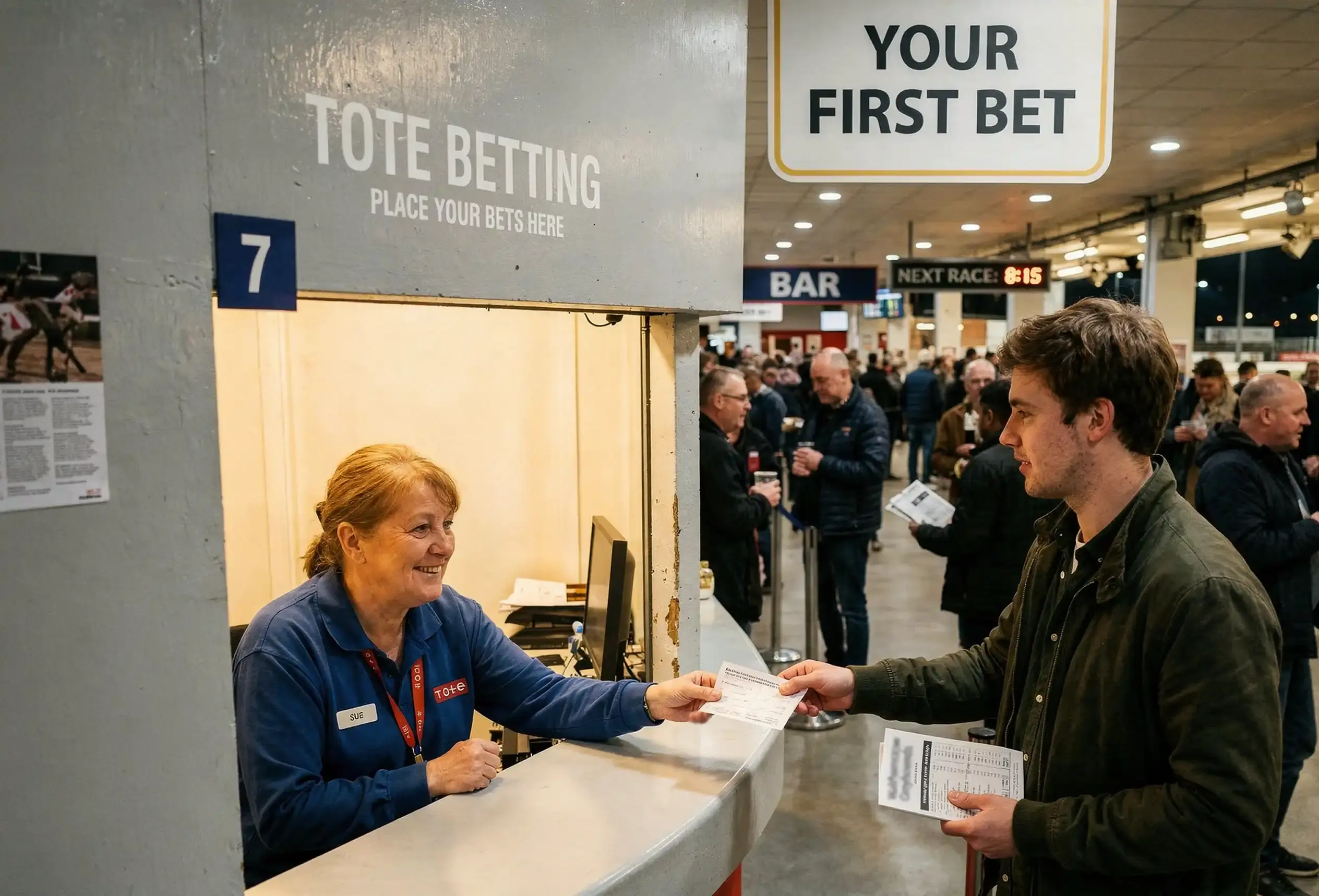
Placing Your First Greyhound Bet: A Practical Walkthrough
Greyhound betting is one of those things that looks complicated until someone explains it plainly. There are six dogs, six traps, a race that lasts about thirty seconds, and a set of bet types that ranges from the straightforward to the ambitious. The greyhound racing betting guide for beginners starts here: with the acknowledgement that every punter, no matter how experienced, placed a first bet at some point and had to figure out what the numbers meant.
The scale of the market is larger than most newcomers expect. Retail betting turnover on greyhound racing reached £794 million in the year ending March 2024, according to Gambling Commission data — and that covers betting shops alone, without counting online activity. Greyhound racing is the second most bet-on racing sport in the UK after horse racing, and tracks like Newcastle at Brough Park generate content for the betting market four days a week. Whether you are placing a bet at the track, through a bookmaker app or over the counter in a shop, understanding the basics of how greyhound betting works gives you a foundation that applies everywhere.
See also: newcastle greyhound results — complete Newcastle greyhound analysis.
Win, Each-Way, Forecast, Tricast: Every Bet Type Explained
The simplest greyhound bet is a win bet. You pick one dog to finish first. If it wins, you are paid at the odds that were available when you placed the bet — or at the starting price, depending on which option you selected. If it finishes second, third or anywhere else, you lose. Win betting is the starting point for most beginners because it requires one decision: which dog?
An each-way bet is two bets in one. The first half is a win bet; the second half is a place bet. If your dog wins, both parts pay out. If it finishes in the places — typically first or second in a six-runner greyhound race — the place part pays out at a fraction of the win odds, usually one quarter. Each-way betting costs double a standard win bet because you are making two wagers, but it gives you a return even when your selection narrowly misses the top spot. For beginners, it is a useful safety net while you are still developing a feel for the form.
A forecast requires you to predict the first two finishers in the correct order. A reverse forecast covers both possible orders between your two selections but costs twice as much. A combination forecast selects three or more dogs and covers every possible forecast permutation among them. Forecast betting rewards accuracy: the dividends are larger than win bets because the probability of picking the exact one-two is lower.
A tricast extends the principle to the first three finishers in order. In a six-runner race, there are 120 possible tricast combinations, which is why tricast dividends can be substantial — particularly in competitive races where no single dog dominates. Combination tricasts cover multiple permutations and multiply your stake accordingly. Tricast betting is best left until you are comfortable with win and forecast bets, because the cost of covering multiple permutations can escalate quickly.
The Tote is a pool betting system where all stakes on a particular bet type are combined and the dividend is calculated from the pool after the operator takes a percentage. Tote bets are available at the track and offer an alternative to fixed-odds betting with a bookmaker. The dividend is not known until after the race, which adds uncertainty but occasionally produces returns that exceed what fixed odds would have offered. For beginners, the Tote win bet is a good starting point — simple to place, easy to understand and available at any racecard meeting including Newcastle.
Betting at the Track vs Betting Online: Key Differences
Betting at Newcastle on race night means choosing between the Tote windows and the on-course bookmakers. The Tote operates a pool system; the bookmakers offer fixed odds. Both are positioned around the stadium and accessible throughout the meeting. The advantage of on-course betting is immediacy: you study the racecard, walk to the bookmaker, place your bet and watch the race from the grandstand. There is no app to navigate, no account to fund, no delay.
Online betting offers a different set of advantages. You can compare odds across multiple bookmakers before committing, access detailed form data and sectional times that the racecard may not include, and place bets from anywhere — your sofa, a pub, a bus. Most major operators stream Newcastle races live through their apps, so you can watch the race and monitor your bet in the same interface. The total prize money pool across all GBGB tracks exceeds £15.7 million annually, and the competitive nature of the racing programme generates a steady flow of betting opportunities that online punters can access without attending a single meeting.
The practical difference for a beginner is this: betting at the track teaches you the rhythm of greyhound racing in a way that a screen cannot. You see the dogs in the parade, read the racecard in your hands, hear the commentary over the PA and feel the crowd react around you. Online betting is more efficient and more analytical, but it strips away the sensory experience that makes the first few visits memorable. If you are new to greyhound racing, doing both — starting at the track and then continuing online — gives you the fullest introduction.
Responsible Gambling: Limits, Self-Exclusion and Where to Get Help
Any greyhound racing betting guide for beginners that does not address responsible gambling is incomplete. Greyhound racing moves fast — twelve races on a card, fifteen minutes between each — and the pace can encourage impulsive betting if you are not prepared. Setting a budget before you start and treating it as the price of an evening’s entertainment, rather than as an investment to be recouped, is the most important habit a new punter can develop.
Check the Newcastle greyhound odds.
Every licensed bookmaker in the UK is required by the Gambling Commission to offer deposit limits, loss limits and self-exclusion tools. Deposit limits cap how much money you can add to your account in a given period. Loss limits restrict how much you can lose. Self-exclusion allows you to block yourself from a platform entirely for a minimum period, and the national GAMSTOP scheme extends that exclusion across all UK-licensed online operators simultaneously.
If gambling stops being enjoyable, or if you find yourself spending more than you can afford, help is available. GamCare offers free advice and support through its helpline and website, and the National Gambling Helpline is accessible around the clock. These services are confidential and staffed by people who understand the specific dynamics of gambling-related harm. The point of a greyhound racing betting guide for beginners is to help you enjoy the sport with your eyes open — and that includes knowing when to walk away from the window and when to ask for support if things go further than you intended.
