 Available in US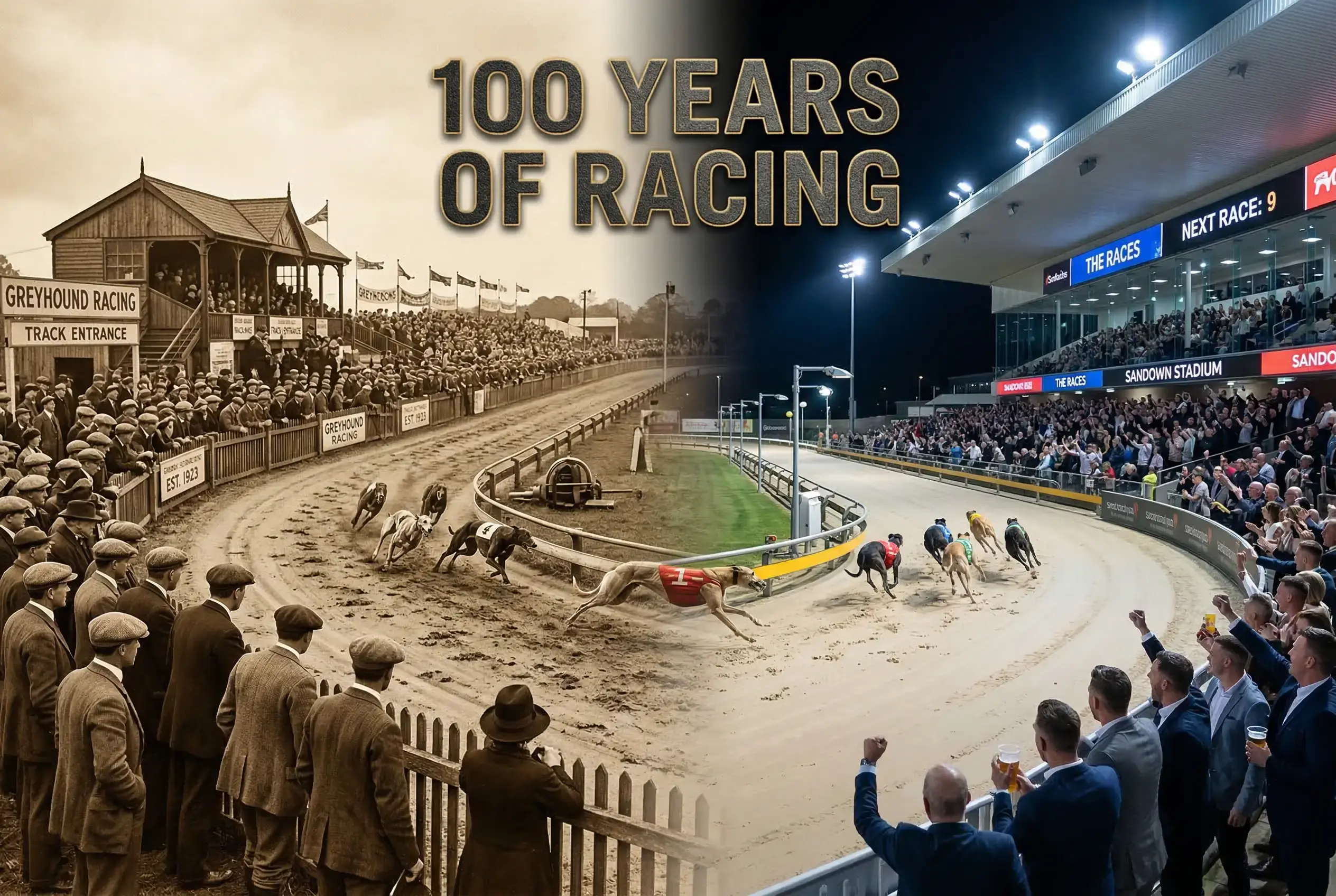
One Hundred Years on Track: Greyhound Racing Marks a Century
On 24 July 1926, the first licensed greyhound meeting in Britain took place at Belle Vue Stadium in Manchester. A crowd gathered to watch dogs chase a mechanical hare around a track, and an industry was born. One hundred years later, in 2026, the sport marks its centenary in a very different landscape — eighteen licensed stadia instead of seventy, falling betting revenue, a legislative ban in Wales and a welfare debate that shows no sign of resolving. But the dogs are still running, and the 2026 centenary of greyhound racing is the sport’s opportunity to tell its own story.
The GBGB has launched a dedicated programme under the banner 100 Years on Track, encompassing celebratory events, historical recognition and a public campaign designed to remind the country that greyhound racing is not just a gambling product but a community sport with roots in working-class Britain. The programme runs throughout 2026, with events at tracks across the country building toward the anniversary date in July. For Newcastle, which opened its own track at Brough Park just two years after Belle Vue, the centenary is both a national celebration and a local milestone.
See also: newcastle greyhound results — all about Newcastle greyhound racing.
Belle Vue 1926: How the First Licensed Meeting Started It All
Greyhound racing with a mechanical hare originated in the United States, but it was the transatlantic transfer to Britain in the mid-1920s that turned it into a mass spectator sport. The promoters behind Belle Vue saw the potential: here was an entertainment that combined the thrill of racing with the excitement of betting, could be staged in the evening under floodlights, and was accessible to working-class audiences who could not afford a day at the horse races.
The Belle Vue meeting on 24 July 1926 drew a crowd estimated in the thousands. Within months, new tracks were opening across the country — Manchester, London, Birmingham, Glasgow, Newcastle. The speed of the expansion was remarkable. By the end of the 1920s, greyhound racing was the second most attended spectator sport in Britain after football, and the social fabric of urban working-class life had been permanently altered. The dogs were cheap to watch, the betting was exciting, and the evenings at the track offered a social experience that pubs and cinemas could not replicate.
The regulatory framework followed quickly. The National Greyhound Racing Club (later NGRC, eventually absorbed into the GBGB) was established to license tracks, register dogs and enforce rules. The distinction between licensed and unlicensed tracks — the latter known as flapping tracks — defined the sport for decades. Licensed racing offered regulated betting, veterinary oversight and standardised rules. Flapping tracks operated outside those structures, and the tension between the two worlds persisted well into the modern era. By the time the GBGB was formed, the licensed sector had consolidated into a smaller but more regulated industry that could credibly claim to prioritise welfare and integrity — a claim the centenary programme is designed to reinforce.
Centenary Events: Track of the Year, Dinners and Celebrations
The GBGB’s centenary programme includes several strands. The Track of the Year Award, already an annual fixture, takes on additional significance in the centenary year as a recognition of the stadia that have done the most to promote the sport and maintain standards. A centenary dinner, bringing together figures from across the industry — trainers, track managers, regulators, sponsors — is planned as a formal celebration of the milestone.
Individual tracks are expected to host their own centenary-themed events throughout 2026. These may include historical exhibitions, nostalgia nights featuring past champions, and community engagement activities designed to connect the sport with the neighbourhoods that have supported it for generations. At Newcastle, the centenary provides an opportunity to celebrate almost a century of racing at Brough Park — a timeline that few other tracks in the country can match. The specifics will vary from venue to venue, but the unifying theme is reflection: what the sport has been, what it is now, and what it aspires to become.
GBGB CEO Mark Bird has framed the centenary as an opportunity not only to look back but to look forward with confidence. The strength of greyhound racing, as Bird has described it, has always been in bringing families and communities together — a function that the sport can still serve if it adapts to modern expectations around welfare, accessibility and entertainment value. The centenary is the platform for that message, and the industry is investing in it as both a celebration and a repositioning exercise.
Whether the centenary achieves lasting impact or proves to be a momentary pause before the next round of challenges will depend on what follows. A well-attended centenary dinner is not a substitute for a sustainable funding model. A Track of the Year trophy does not insulate the winner from declining betting revenue. But the centenary does something that the sport has struggled to do in recent years: it gives greyhound racing a positive story to tell, at a moment when positive stories are in short supply.
Newcastle’s Place in the Centenary: From 1928 Opening to 2026
Newcastle Stadium at Brough Park opened on 23 June 1928, just two years after the Belle Vue meeting that started it all. A greyhound called Marvin won the first race at odds of 3/1, and the track has been running ever since — through the Depression, the Second World War, the post-war boom, the long decline in attendances, corporate takeovers and the digital revolution that transformed how racing is consumed.
Discover the history of Brough Park.
In the centenary year, Newcastle is one of the oldest continuously operating greyhound venues in the country. Its near-century of racing gives it a historical weight that few tracks can match. The All England Cup, established at Brough Park in 1938, is one of the longest-running open events in the sport, and its presence on the centenary calendar underscores Newcastle’s role as a venue of national significance, not just a regional BAGS track. The stadium’s place in the centenary story is earned, not honorary — it has been part of the sport’s fabric for almost as long as the sport itself has existed.
The 2026 centenary of greyhound racing coincides with a period of relative optimism at Newcastle. Footfall is up, the Racing Club Membership scheme is in its launch year, and Wicky Ned’s Greyhound of the Year award in 2024 raised the track’s national profile. Brough Park enters the centenary not as a venue clinging to the past but as one that has genuine momentum heading into its second century. Whether that momentum can be sustained beyond the celebratory year is the challenge. But for now, the track that opened two years after Belle Vue has earned its place at the centre of the party.
